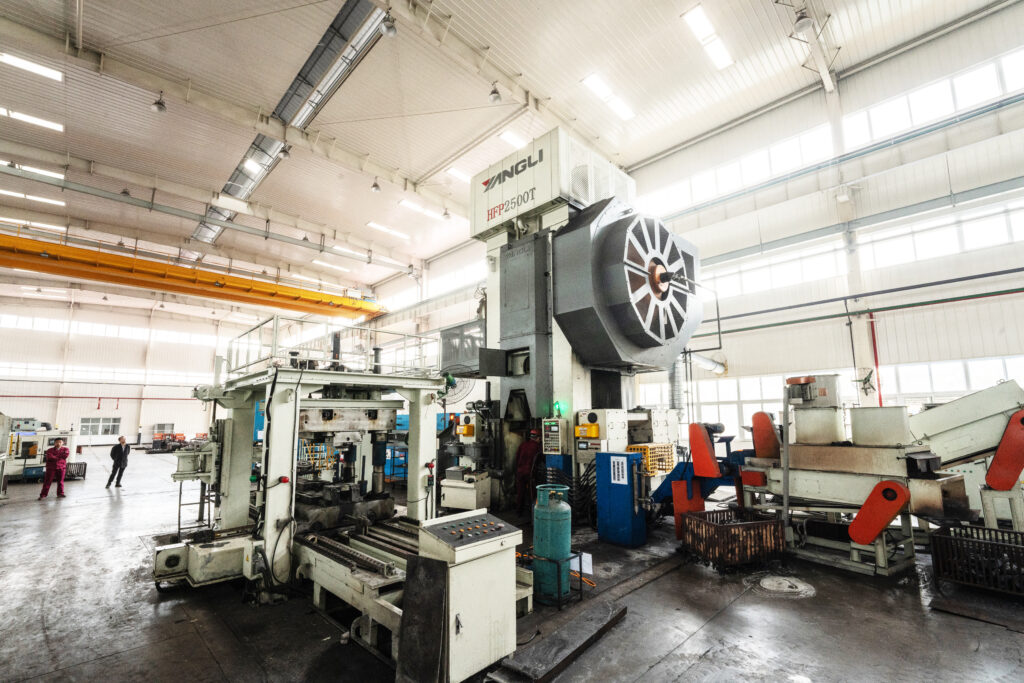
Forming Force in Metal Stamping: How to Calculate It and How to Choose the Right Press
14 8 月, 2026
Forming force in metal stamping is one of the most critical parameters in manufacturing process design. Getting it right helps you choose the right press, protect your tooling, ensure part quality, and avoid costly production failures
Too little force → parts out of specification.
Too much force → unnecessary wear on machinery and tools.
That’s why calculating forming force is a non-negotiable step in any industrial stamping engineering project.
In this article, we’ll cover:
- What forming force is
- Key variables that affect it
- How it impacts press selection
What Is Forming Force in Metal Stamping?
Forming force is the amount of pressure a press must apply to deform a metal sheet into a desired shape.
Depending on the operation—cutting, punching, bending, or drawing—the required force can vary significantly.
Accurate force determination is essential for a stable, safe, and efficient production process.
Why Is It So Important?
Properly calculating forming force enables you to:
- ✅ Select the correct press tonnage
- ✅ Avoid machinery overloads
- ✅ Prevent premature die wear
- ✅ Achieve tighter part precision
- ✅ Reduce scrap and rework
- ✅ Extend equipment lifespan
A correctly sized press operates within its optimal performance range, boosting both productivity and reliability.
Key Factors That Affect Forming Force
Several technical factors influence the force required for metal stamping:
🔩 Material Type
Different materials resist deformation differently:
- Carbon steel
- Stainless steel
- Aluminum
- Advanced High-Strength Steels (AHSS)
Higher mechanical strength = higher forming force required.
📏 Sheet Thickness
This is one of the most influential factors. Thicker sheets require significantly more force.
📐 Working Length
For bending operations, a longer bend length means higher total force.
⚙️ Type of Operation
Each operation has unique force demands:
- Cutting
- Punching
- Bending
- Deep drawing
🧩 Part Geometry
Parts with multiple bends or complex shapes often require different stress distributions—and sometimes multi-stage processes.
How to Calculate Forming Force
The exact calculation depends on the specific process and part design, but engineers typically consider:
- Material tensile strength
- Sheet thickness
- Cutting or bending length
- Die geometry
- Safety factor
💡 Beyond theoretical formulas, most engineers use simulation software to validate calculations before building the die.
Forming Force vs. Press Tonnage: What’s the Relationship?
One of the most common mistakes is selecting a press based only on its maximum tonnage.
A proper press selection must also account for:
- Required forming force
- Stroke length
- Production speed
- Die dimensions
- Part size
⚠️ Oversized press → higher energy consumption and investment costs
⚠️ Undersized press → compromised quality and increased failure risk
What Happens When You Get the Calculation Wrong?
Incorrect force calculation can lead to:
| Issue | Consequence |
|---|---|
| ❌ Out-of-spec parts | Insufficient force = improper geometry |
| ❌ Accelerated die wear | Excessive loads = tool stress |
| ❌ Production stoppages | Overloads = mechanical failures |
| ❌ Increased scrap | Dimensional defects = material waste |
| ❌ Higher operating costs | Repairs, rework, and downtime add up |
Modern Technologies for Force Control
Today’s advanced presses come equipped with systems for precise force control:
- Load sensors – monitor force in real time during each cycle
- CNC systems – adjust parameters based on part type
- Servo presses – control speed, position, and force throughout the stroke
- Real-time monitoring – detect deviations before they cause defects
These technologies improve process stability and make quality control easier than ever.
Best Practices for Optimizing Forming Force
To get the most out of your stamping process:
✔️ Select the right material for the application
✔️ Design the die with care
✔️ Apply an appropriate safety margin when calculating tonnage
✔️ Run simulations before tool manufacturing
✔️ Perform regular press and die maintenance
✔️ Continuously monitor operating parameters
Following these practices helps extend equipment life and reduce overall production costs.
Final Thoughts
Forming force in metal stamping is a fundamental parameter for designing safe, efficient, and cost-effective processes.
Calculate it correctly → choose the right press → improve part quality → reduce wear and tear.
Looking for the Right Press for Your Application?
At YANGLI , we offer a comprehensive range of mechanical, hydraulic, and servo presses designed for a wide variety of industrial stamping applications.
Our technical team can help you select the equipment with the optimal tonnage and features for your specific manufacturing needs.
📩 Contact us today for more information.